Copan Honduras: Ancient Ruins and Coffee Highlands
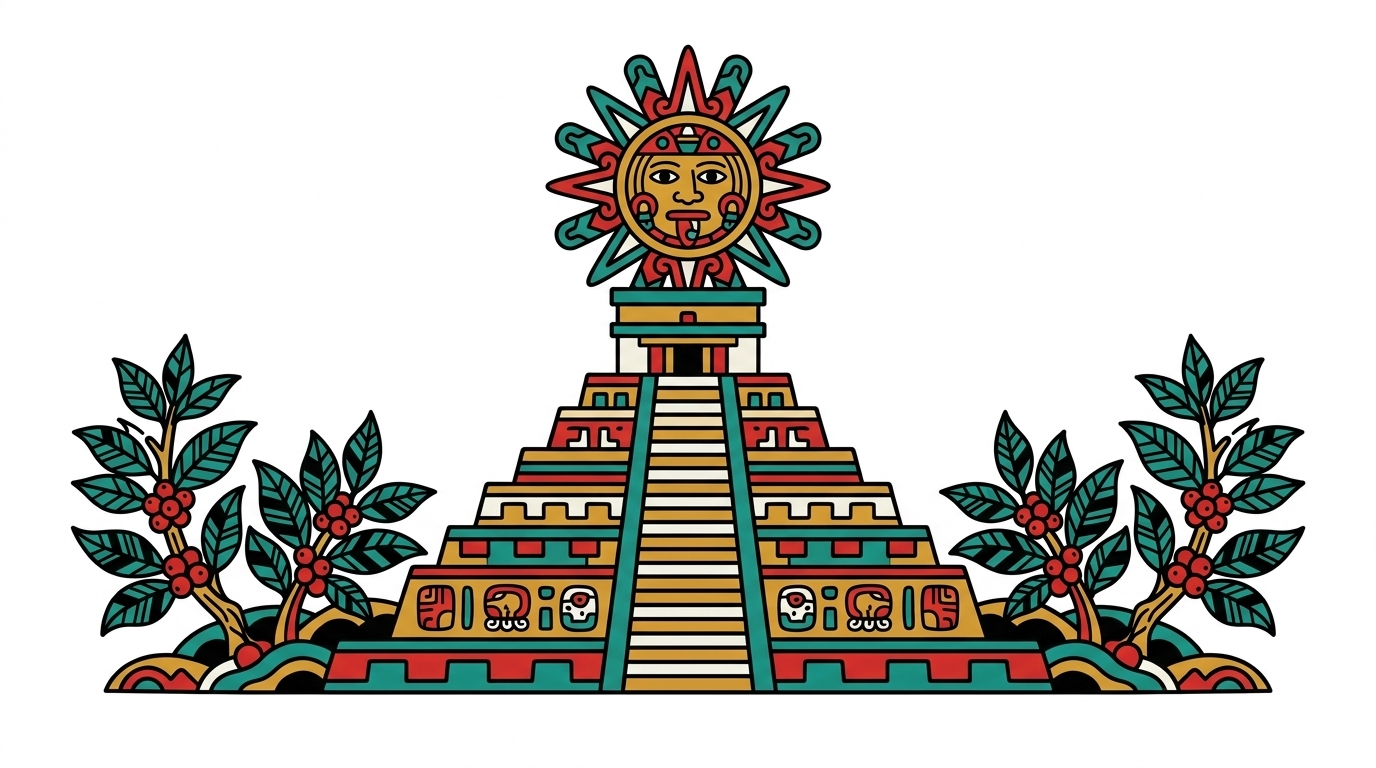
Two Things Copán Is Famous For
Most people know Copán for its ruins, the ancient Mayan city that UNESCO declared a World Heritage Site in 1980. The hieroglyphic stairway at Copán contains more ancient Mayan text than any other monument ever discovered, and the jaguar carvings honor Balam, the jaguar god who presided over Copán’s kings. It’s one of the most extraordinary archaeological sites in the Americas.
Fewer people know that the mountains surrounding those ruins grow some of the finest arabica coffee in Central America.
That’s not a coincidence.
Why the Mountains of Copán Grow Great Coffee
Coffee quality is determined more by geography than by anything else. The Copán highlands sit between 1,300 and 1,700 meters above sea level. At that altitude, three things happen that are impossible to replicate at lower elevations:
- Temperatures are cooler: coffee cherries develop more slowly, building more complex sugars and acids
- Volcanic soil is rich: the same geology that sustained the Maya civilization for over a thousand years feeds the coffee trees today
- The dry season is distinct: a clear wet/dry cycle produces consistent, well-defined harvests with cleaner flavors
The result: dense, complex beans with bright acidity and deep sweetness. Copán consistently produces among the highest-scoring lots at the Cup of Excellence Honduras competition. It’s not the only Honduran region worth exploring — Siguatepeque produces equally impressive high-altitude lots from farms like Finca El Zapote.
The Same Soil, A Different Crop
The ancient Maya who built the temples at Copán also cultivated cacao in these same valleys. They traded it across Mesoamerica, from the Gulf Coast of Mexico to the Pacific shores of Guatemala. They made ceremonial drinks from it. They placed cacao pods on their altars.
Coffee didn’t exist in the Maya world. It arrived from Ethiopia, via Arabia and Europe, centuries after the Maya civilization collapsed. But the same soil, the same altitude, the same human tradition of caring carefully for what the land produces: that’s what makes Copán’s coffee exceptional today.
When you drink a cup of Copán coffee, you’re tasting a place that humans have cultivated for more than two thousand years.
Our Partners in Copán
We source our private label coffees, Balam, Mut, and Kukulkan, from two cooperatives with deep roots in the Copán highlands.
CAFICO has worked with smallholder farmers in Copán for decades, focusing on quality over volume. Their members cultivate Catuaí and Lempira varieties, traditional Honduran cultivars that thrive at high altitude. CAFICO emphasizes producer traceability and fair pricing, and their lots regularly receive specialty-grade scores above 84 points.
COCAFCAL serves the Copán corridor and focuses on sustainable farming practices. They work with smallholder families across the region, providing agronomic support and price premiums for quality lots. Their members have been growing coffee at these altitudes for multiple generations.
Both cooperatives share a commitment to the land and the community, values that align with what we’re trying to do at Mayan Origin.
We also carry two coffees from Café Welchez, a fifth-generation family farm in Copán. The House Blend is a natural and washed espresso-style medium roast. The Santa Isabel is a single-origin light roast from their estate farm, grown with Parainema, Catuaí, and Caturra varieties at 1,000–1,300 masl.
What Makes Copán Coffee Taste Different
If you’ve only ever drunk coffee from Colombia, Ethiopia, or Brazil, Copán will offer something distinct.
Honduras Copán arabica tends toward:
- Bright, clean acidity (citrus, apple, stone fruit)
- Deep sweetness (brown sugar, honey, dried fruit)
- A substantial body without heaviness
- Long, clean finish
This is why Copán coffees work well across roast levels. Our Balam medium roast shows the bright citrus and almond character. Our Mut light roast opens up the jasmine and stone fruit notes that natural processing develops. Our Kukulkan dark roast pushes the sweetness toward dark chocolate and smoky cedar.
Same origin. Three entirely different cups.
To get the most from Copan’s complex flavors, a burr grinder and a pour over dripper let you control extraction precisely enough to taste the difference altitude makes. If you prefer immersion brewing, a French press also brings out the body and sweetness these highland beans are known for.
High-altitude beans like these develop denser cellular structure, which means grind consistency matters more than usual. A quality hand grinder gives you the uniform particle size that lets those citrus and stone fruit notes come through cleanly.

Timemore Chestnut C2 Max
The hand grinder that made burr grinding affordable without sacrifice.
Approximate price · Check current price on Amazon
Weighing your coffee and water removes the guesswork from brewing. With beans this nuanced, the difference between 15 and 17 grams changes the entire cup.

Greater Goods Coffee Scale
The budget scale that coffee Reddit actually recommends.
Approximate price · Check current price on Amazon

Hario V60 Dripper 02
The pour over dripper used by more specialty cafes than any other.
Approximate price · Check current price on Amazon
Visiting Copán
If you ever have the chance to visit Copán Ruinas, Honduras, do it. The town sits a short walk from the archaeological site and has a small but thriving specialty coffee scene. Several farms in the surrounding hills welcome visitors during harvest season (October through February).
The ruins themselves are remarkable. Unlike the flat Maya sites of the Yucatán, Copán is nestled in green mountains. The carvings here are among the most detailed in the Maya world. The Altar Q alone tells the story of every king in Copán’s dynastic line.
It’s a place where history and nature sit side by side, and where the connection between people and the land has never been broken. To learn more about the gods the Maya worshipped in these mountains, see our complete guide to Mayan deities.
High-altitude Copan beans are dense and flavorful but they lose complexity fast once ground. A vacuum canister keeps them at peak freshness.

Fellow Atmos Vacuum Canister
Twist the lid, remove the air, keep coffee fresh for weeks.
Approximate price · Check current price on Amazon
Frequently Asked Questions
Is Copán coffee specialty grade? Yes. Coffee from the Copán highlands regularly scores 83–87+ points on the SCA scale, which qualifies as specialty grade. High altitude, consistent climate, and experienced producers contribute to the quality.
What altitude is Copán coffee grown at? Our Copán coffees are grown at 1,300–1,700 meters above sea level (masl). This is considered high-altitude for Honduras and produces denser beans with greater flavor complexity.
What varieties of coffee grow in Copán? Common varieties in the Copán region include Catuaí, Lempira, Parainema, and Caturra. These are well-adapted to Honduras’s highland conditions and produce consistently high-quality lots.
Where can I buy authentic Copán Honduras coffee? You can shop our full collection of Copán coffees, including three private label roasts (Balam, Mut, Kukulkan) sourced directly from cooperatives in the region. Every order is packed fresh in Honduras and shipped direct.
James Hoffmann covers Copan specifically in The World Atlas of Coffee, noting its altitude range of 1,000 to 1,500m and the Mayan ruins connection.

The World Atlas of Coffee
The definitive guide to coffee — from bean to cup, country by country.
Approximate price · Check current price on Amazon
Taste the highlands. Shop all our Copán coffees.