Balam, the Jaguar Mayan God: Powers and Story
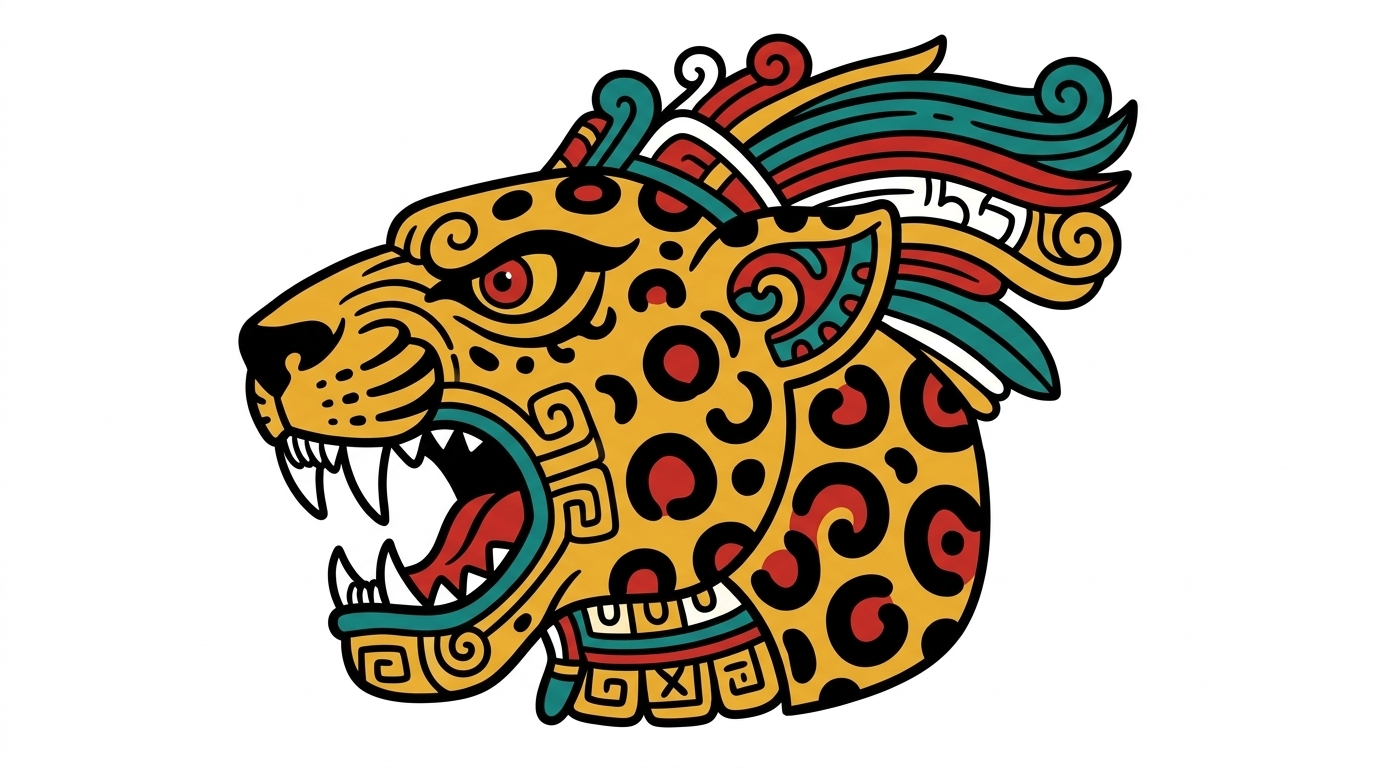
What Does Balam Mean?
In the Mayan language, balam means jaguar. The word comes from Yucatec Maya and appears across all major Mayan language families, from K’iche’ to Ch’orti’. But balam carried far more weight than a simple animal name.
Balam was also a royal title. Mayan kings took the word as part of their names to claim the jaguar’s divine authority. At Tikal, the dynasty of Chak Tok Ich’aak (“Great Jaguar Paw”) ruled for centuries. At Copán, jaguar imagery marked the most sacred spaces. The word balam also described shamans who could shift into jaguar form, the balamo’ob, spiritual intermediaries between the world of the living and the dead.
So when someone asks “what does balam mean in Mayan?” the answer is layered: jaguar, king, shaman, protector, and divine force, all compressed into a single word.
Who Was Balam?
The jaguar wasn’t just an animal to the Maya. It was a god, a spirit guide, and a symbol of supreme power.
The jaguar ruled the night, the underworld, and the hidden forces of the earth. Mayan kings wore jaguar pelts and took jaguar names. Warriors called on Balam’s spirit before battle. Shamans believed the jaguar could move between the world of the living and the world of the dead, and that shapeshifting shamans, called balam, could take jaguar form at will.
No other animal held more spiritual weight in the ancient Mayan world.
The Jaguar in Mayan Cosmology
The Maya organized their universe into four cardinal directions, each guarded by a jaguar deity called a Bacab. Jaguars were associated with the underworld, called Xibalba, and with the night sun: the form the sun took as it traveled through the darkness beneath the earth each night.
This made the jaguar something extraordinary: a creature that lived in both worlds at once. It walked the surface of the earth but belonged to the darkness below. It was feared, respected, and called upon for protection.
Mayan royalty were especially connected to Balam. To rule was to channel the jaguar’s power. The title Balam was taken by kings as a claim of divine authority, that they carried the spirit of the night world within them. While Kukulkan, the Feathered Serpent, commanded the sky and wind, the jaguar god commanded everything below.
The Jaguar at Copán
Look at almost any major Mayan archaeological site, Copán, Tikal, Palenque, and you’ll find the jaguar everywhere. On temples, on thrones, on ceremonial vessels used to prepare cacao drinks.
The Copán ruins in western Honduras, where our coffee is grown, contain some of the finest jaguar imagery in the entire Mayan world. The Jaguar Stairway at Copán is considered one of the greatest works of pre-Columbian art ever created. Hundreds of carved glyphs line the steps, and jaguar motifs appear throughout the site’s altars and stelae.
Copán was one of the most powerful city-states in the Classic Maya period (250–900 CE), and its kings, including the famous 18 Rabbit, invoked Balam’s power through elaborate ceremony and stone carving. For the full story of Balam’s place in the Mayan pantheon alongside Kukulkan, Ixchel, and the other great gods, see our complete guide to the Mayan deities.
What the Jaguar Meant to Everyday Maya People
For ordinary people, Balam wasn’t just a royal symbol. The jaguar appeared in household shrines, in woven textiles, in the markings painted on children’s skin during ceremonies. Jaguar shamans (balamo’ob) served as healers and diviners — spiritual roles they shared with priestesses of Ixchel, the moon goddess — and as intermediaries between the living and the dead.
When a Mayan farmer woke before dawn to tend the fields, in the same dark hours before sunrise when jaguars hunt, Balam was there. The jaguar represented the courage to move through darkness toward light. That’s a theme that runs through Mayan life and religion from the highlands of Honduras to the lowlands of the Yucatán.
Balam and the Sacred Drink of the Maya
Cacao played a central role in Mayan jaguar ceremonies. The Mayan word for cacao (kakaw) appears in ritual texts alongside jaguar imagery, and painted ceramic vessels show jaguars presiding over cacao preparation.
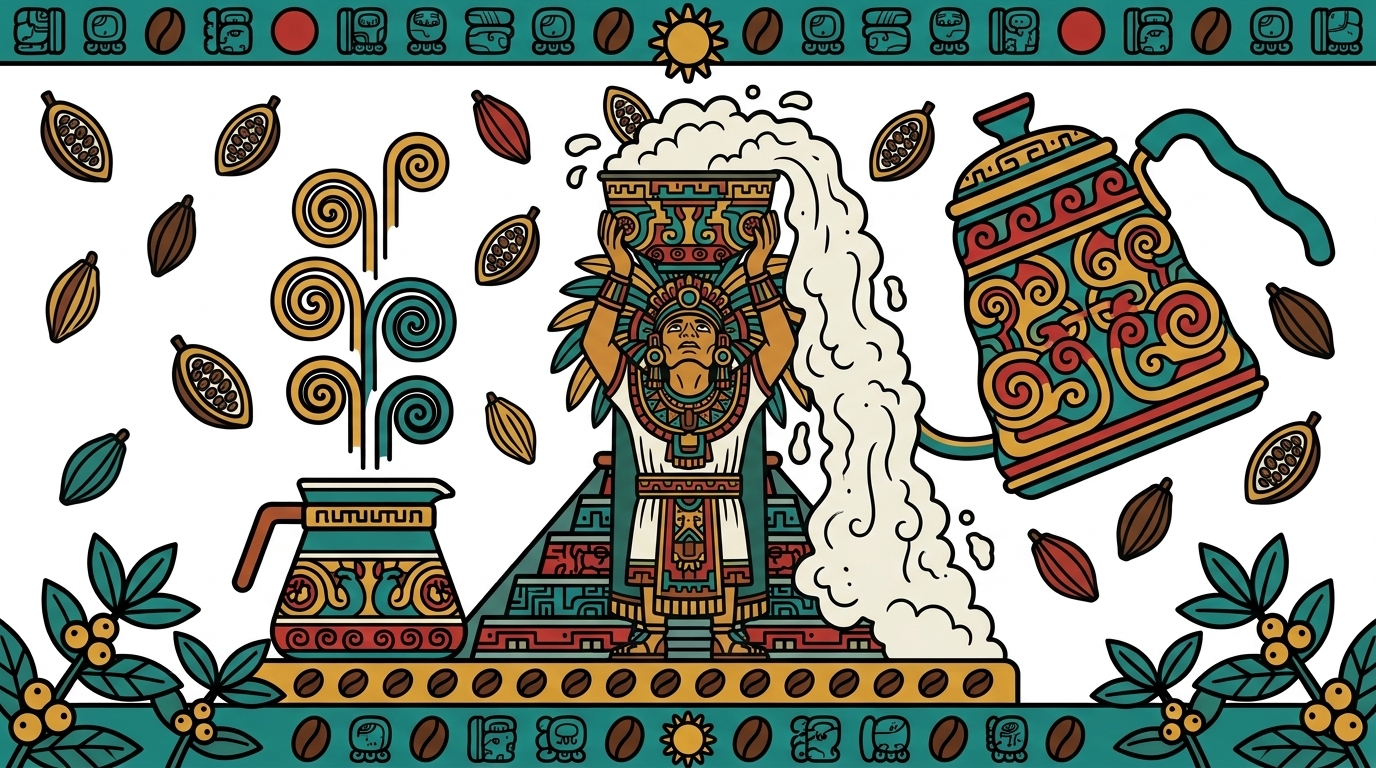
The Maya believed cacao was a gift from the gods, divine food that bridged the human and spirit worlds. Before ceremonies honoring Balam, priests would prepare frothy cacao drinks, sometimes mixed with chili and honey, and pour libations at jaguar altars.
The highland valleys of Copán, where our Balam medium roast comes from, were also ancient cacao-growing territory. The same soil that fed the Maya’s sacred cacao trees now grows the coffee that carries Balam’s name.
Simon Martin and Nikolai Grube’s Chronicle of the Maya Kings and Queens devotes a full chapter to the Copan dynasty and its jaguar kings.

Chronicle of the Maya Kings and Queens
Dynasty by dynasty, city by city — every known Mayan ruler decoded.
Approximate price · Check current price on Amazon
If you’re brewing our Balam medium roast at home, a vacuum canister keeps the beans fresh weeks longer than the bag alone.

Fellow Atmos Vacuum Canister
Twist the lid, remove the air, keep coffee fresh for weeks.
Approximate price · Check current price on Amazon
Jessica Easto’s Craft Coffee walks through every brewing method step by step — a practical companion to any bag of single-origin beans.

Craft Coffee: A Manual
A practical guide to brewing better coffee at home — method by method.
Approximate price · Check current price on Amazon
Balam and Our Medium Roast Coffee
We named our medium roast after Balam because the jaguar embodies what great coffee should be: balanced and powerful at once.
Balam is single origin from the highlands of Copán, Honduras, grown at 1,300 to 1,700 meters above sea level, where cooler temperatures slow the development of the coffee cherry and build complexity in the bean. Washed process. Nothing hidden.
The tasting notes are exactly what you’d expect from a highland Copán medium roast: brown sugar, toasted almond, and a clean citrus finish. It’s balanced and deeply satisfying, coffee that earns its place in your morning ritual without overpowering it.
Lighter than a dark roast, bolder than a light. Balam sits in the middle.

Popol Vuh: The Definitive Edition
The Mayan creation story — the Hero Twins, the gods, the origin of humanity.
Approximate price · Check current price on Amazon
For a comprehensive archaeological treatment of jaguar worship and the other great Mayan deities, Michael Coe’s The Maya covers the jaguar gods of the underworld in detail.

The Maya (9th Edition)
The most respected introduction to Mayan civilization in print.
Approximate price · Check current price on Amazon
Frequently Asked Questions
What does “Balam” mean in Mayan? Balam means jaguar in the Yucatec Mayan language. It was also used as a royal title: the king carried the spirit of the jaguar god.
Where is Balam coffee grown? Our Balam medium roast is grown in the highlands of Copán, Honduras, at 1,300–1,700 meters above sea level. Copán is both a world-famous archaeological site and one of Central America’s finest coffee-growing regions.
Is Balam a dark roast? No. Balam is a medium roast with notes of brown sugar, toasted almond, and clean citrus. If you prefer a bolder, darker cup, try our Kukulkan Dark Roast.
What process is Balam coffee? Balam uses the washed (wet) process, which produces a clean, bright cup that highlights the natural terroir of the Copán highlands.
Drink with purpose. Shop Balam Medium Roast.