Mayan Food: What the Ancient Maya Ate and Drank
Food Was Sacred to the Maya
For the ancient Maya, food was never just fuel.
Every crop had a deity. Every meal carried ritual significance. Maize, corn, was so central to Maya life that their creation myth, the Popol Vuh, describes humans being literally made from it. The Maya didn’t just grow corn. They believed they were corn.
This relationship between food, divinity, and daily life ran through everything the Maya grew, harvested, prepared, and consumed, from the cacao drink shared at royal courts to the tamales left at temple altars.
Maize: The Foundation of Everything
No crop was more important to the ancient Maya than maize.
It provided the majority of daily calories across all social classes. It was ground into masa for tortillas, tamales, and atole (a warm corn porridge). It was fermented into chicha, a mildly alcoholic drink consumed at festivals. It was ground into a paste, mixed with water and cacao, and drunk as a portable field ration that sustained armies and farmers alike.
The Maya god of maize, Hun Hunahpu, was one of the most important deities in the pantheon. His death and rebirth in the underworld, a story told in detail in the Popol Vuh, was a metaphor for the agricultural cycle: seed buried in dark soil, sprout pushing toward light, harvest, death, and return.
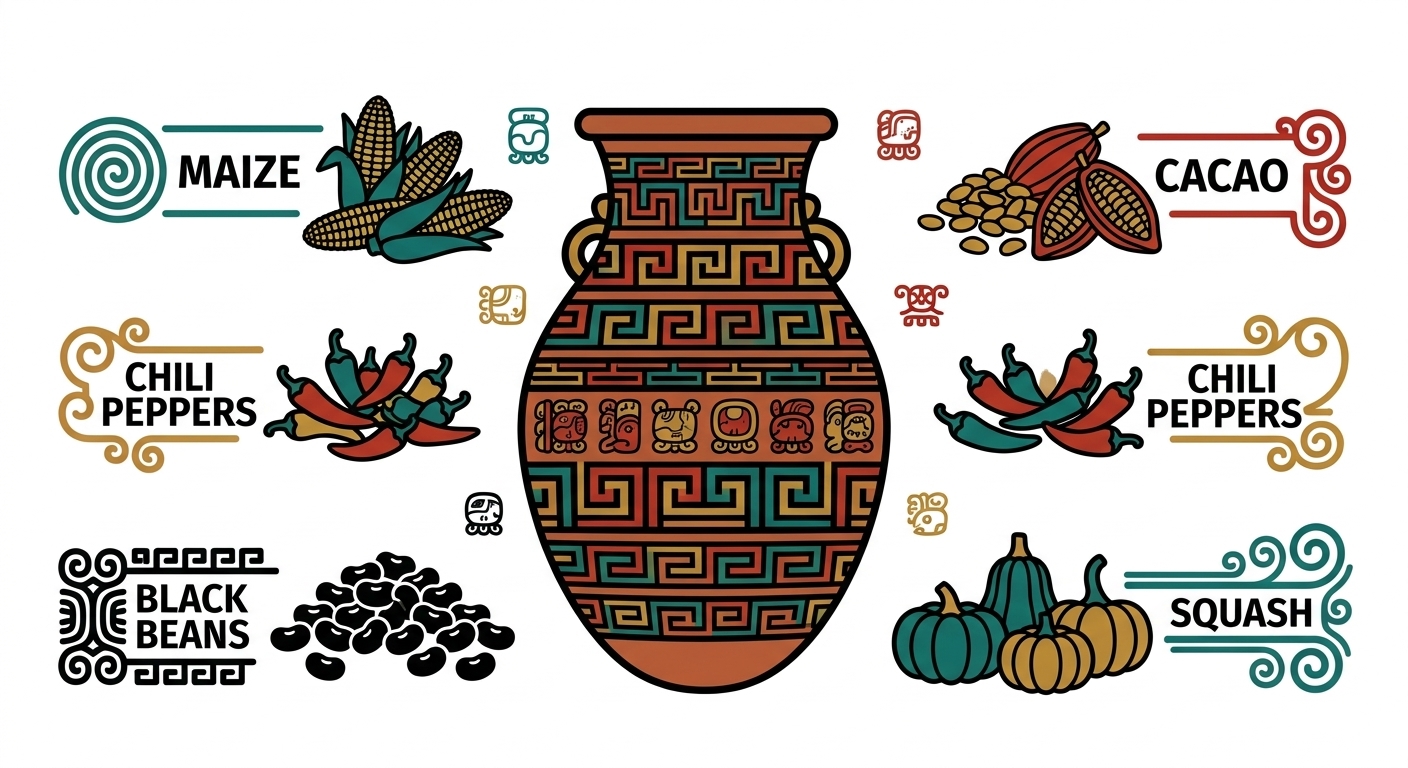
The milpa system, a rotating polyculture of maize, beans, and squash grown together, was the agricultural backbone of Mayan civilization. The three crops supported each other: maize provided structure for beans to climb, beans fixed nitrogen in the soil, squash shaded the ground and suppressed weeds. This system fed the Maya for thousands of years and is still practiced in Honduras, Guatemala, and southern Mexico today.
Cacao: The Drink of Gods and Kings
If maize was the food of the people, cacao was the food of the elite.
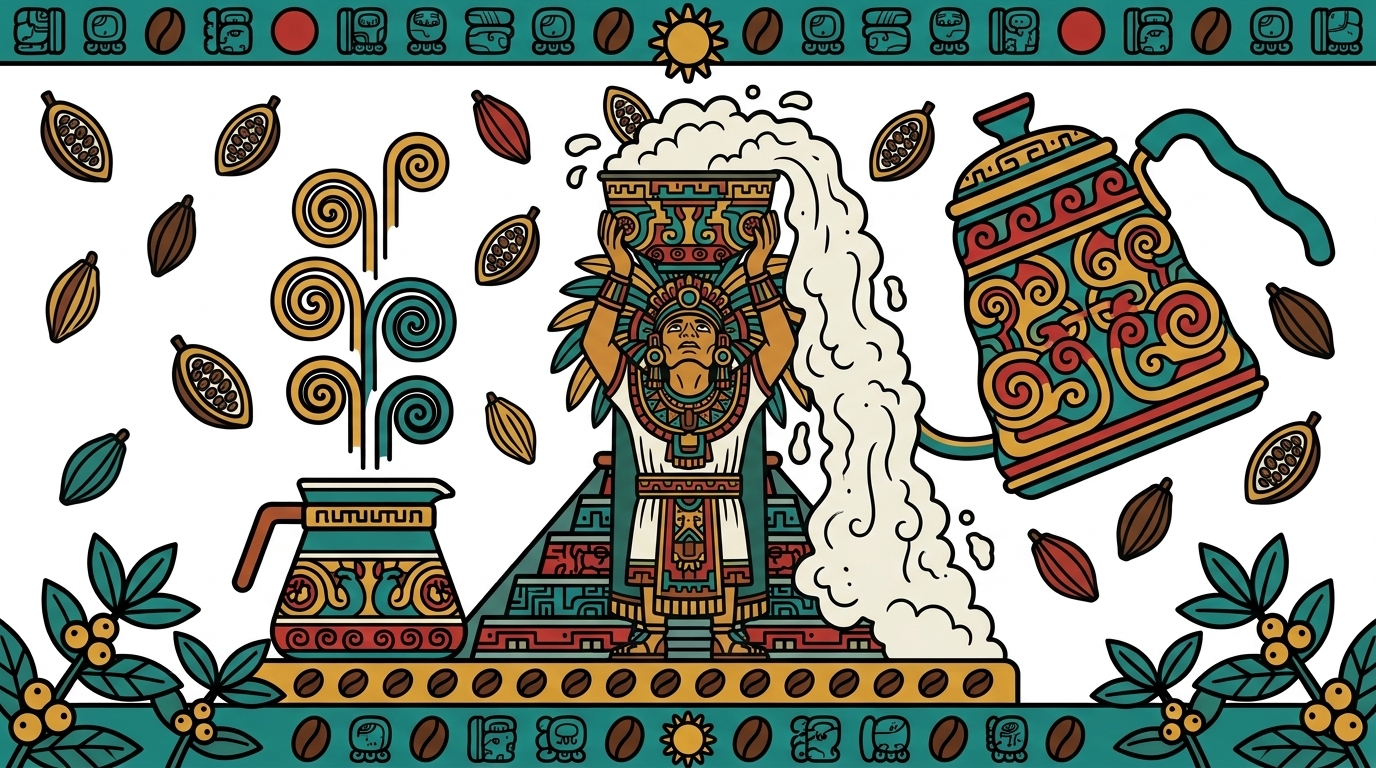
The Maya had been cultivating and consuming cacao for over 3,000 years by the time the Spanish arrived in the 16th century. But their cacao was nothing like modern hot chocolate. They ground the fermented and dried beans into a paste, mixed it with water, chili peppers, vanilla, and spices, and poured it back and forth between vessels to create a frothy drink.
This drink, called kakaw in the Maya language, was bitter, spicy, and complex. It was served cold or at room temperature, not hot. It was reserved primarily for royalty, warriors, and ritual occasions.
Cacao beans also functioned as currency. You could buy a turkey for 100 cacao beans. A tamale cost a few beans. The value of cacao was so high that counterfeit beans, shells filled with clay, were documented by Spanish chroniclers.
We’ve recreated this ancient drink in our Mayan hot chocolate recipe, and explore the ritual context behind cacao consumption in our guide to the Mayan cacao ceremony.

The True History of Chocolate
How a bitter Mesoamerican drink conquered the world.
Approximate price · Check current price on Amazon
The Popol Vuh describes the gods’ final, successful creation of humans from white and yellow maize — the grain this entire civilization was built on.

Popol Vuh: The Definitive Edition
The Mayan creation story — the Hero Twins, the gods, the origin of humanity.
Approximate price · Check current price on Amazon
Robert Sharer’s The Ancient Maya gives the fullest treatment of Mayan agriculture, trade, and daily life.

The Ancient Maya (6th Edition)
The most comprehensive academic reference on Mayan civilization.
Approximate price · Check current price on Amazon
The cacao tree was sacred and associated with Ixchel, the moon goddess of fertility and weaving, and with the rain deity Chaac, who was believed to be the original guardian of cacao groves. Maya murals at sites like Copán show nobles drinking from cacao vessels at ceremonies and coronations.
Chili Peppers, Squash, and Beans
Beyond the sacred trinity of maize, cacao, and vanilla, the Mayan diet was rich in vegetables, legumes, and herbs.
Chili peppers were used in virtually everything: added to cacao drinks, rubbed on meats, mixed into sauces. The Maya cultivated dozens of varieties, from mild to searingly hot.
Black beans and squash were daily staples. Beans provided protein in a diet that was mostly plant-based for commoners. Squash provided vitamins and variety. Together with maize, they formed the complete nutritional base of Mayan civilization.
Avocados, papayas, sweet potatoes, tomatoes, and jícama were all cultivated or wild-harvested. The Maya ate a more diverse diet of fruits and vegetables than most contemporary civilizations.
Amaranth and chia seeds provided micronutrients and were used in drinks, porridges, and ritual offerings.
Meat, Fish, and Forest Foods
The Maya were not vegetarian, but meat was rarely the center of a meal.
Turkey and dog were the primary domesticated animals. Turkey was a prestige food, consumed at festivals and by the elite. Dog, specifically the Xoloitzcuintli breed, was raised for food in some areas, though this practice was more common in central Mexico than the Maya lowlands.
Deer, peccary (wild pig), armadillo, and manatee were hunted and considered delicacies. Deer hunting had ritual dimensions: hunters prayed before setting out and made offerings after a successful hunt.
Fish and seafood were abundant along the Caribbean and Pacific coasts and in the rivers of the interior. Dried and smoked fish traveled inland as a trade good.
Insects were eaten regularly: ants, grasshoppers, and bee larvae were all part of the diet and are still consumed in parts of Mexico and Guatemala today.
Fermented Drinks: Balché and Chicha
The Maya had a rich culture of fermented beverages.
Balché was a mead-like drink made from the bark of the balché tree steeped in honey and water, then allowed to ferment. It was consumed in religious ceremonies and was believed to induce visions and connect participants to the spirit world.
Chicha was a fermented maize drink similar to beer. Like chicha elsewhere in the Americas, it was sometimes made by chewing maize and spitting it into a vessel, with the enzymes in saliva converting starches to sugars for fermentation. Less ceremonial than balché, chicha was consumed at festivals, harvests, and community gatherings.
Atole was a non-fermented corn drink, thickened with masa and flavored with honey, vanilla, or cacao. It was essentially a calorie-dense meal in liquid form and was consumed across all social classes.
The Role of the Sacred Kitchen
Cooking in Mayan households was women’s work, and it was sacred work.
The three-stone hearth, a small fire enclosed by three hearthstones, was the center of the home. The hearth stones represented the three hearthstones of creation in Maya cosmology. Cooking was not merely domestic; it was an act of participation in the cosmic order.
Grinding maize on a stone metate every morning was so physically demanding that the posture required (kneeling, leaning forward, grinding with body weight) left distinctive marks on the bones of Mayan women that archaeologists can identify thousands of years later.
Did the Maya Drink Coffee?
No. Coffee (Coffea arabica) is native to Ethiopia and was not introduced to the Americas until the 18th century, more than 800 years after the Classic Maya period ended. The ancient Maya never encountered coffee.
Their stimulant of choice was cacao. The theobromine in cacao produces a milder, longer-lasting effect than caffeine, and the Maya consumed it in large quantities at court ceremonies, before warfare, and as medicine. For details on how the Maya prepared their cacao, see our Mayan hot chocolate recipe.
The connection between the Maya and coffee is geographic, not historical. The highland regions of Honduras and Guatemala where the Maya built their civilization — Copán, the Sierra de las Minas, the volcanic slopes of western Honduras — turned out to be ideal coffee-growing territory. When European colonists introduced coffee plants to Central America in the 1700s and 1800s, they thrived in the same volcanic soil and high-altitude climate that had sustained Mayan agriculture for millennia.
Today, the descendants of Maya communities farm coffee in these same highlands. The crop changed, but the land and the families working it trace an unbroken line back thousands of years.
Mayan Food in Honduras Today
The Maya heartland of western Honduras, particularly the Copán Valley and the surrounding mountains, still shows deep continuity with ancient Mayan foodways.
Tortillas made on a comal over an open fire, black beans simmered with herbs, caldo de res (beef broth with yuca and plantain), tamales for celebrations, and cacao-based drinks at festivals all trace direct lines back to pre-Columbian practice.
And the coffee that grows in these same mountains, on land the ancient Maya farmed, under the shade of trees they first cultivated, carries something of that history in every cup.
Our Café Maya Reserva — named for the Maya tradition it honors — is a premium Honduran arabica from producers with over 63 years of roasting history in this country.
Our coffees are sourced from cooperatives in the Copán and Marcala regions of Honduras. The farmers who grow them work land where the Maya civilization once flourished. The Kukulkan dark roast, Balam medium roast, and Mut light roast each carry something of that soil.

The Maya (9th Edition)
The most respected introduction to Mayan civilization in print.
Approximate price · Check current price on Amazon
Cold brew is the gentlest way to extract coffee — 67% less acidic than hot brewing. If you want to taste Honduran beans without any bitterness, this is the method.

Toddy Cold Brew System
The original cold brew maker — smooth concentrate in 12 hours.
Approximate price · Check current price on Amazon
Frequently Asked Questions
What did the ancient Maya eat? The Maya diet centered on maize (corn), black beans, squash, and chili peppers. Cacao was a sacred beverage reserved for royalty and ritual. Turkey, deer, fish, and insects were common protein sources depending on region.
Did the Maya drink chocolate? Yes, but not like modern hot chocolate. Their cacao drink was cold or room-temperature, unsweetened, mixed with chili and spices, and frothed by pouring between vessels. It was a bitter, complex drink consumed at royal courts and ceremonies.
What was the most important crop to the Maya? Maize (corn). It was so central to Maya culture and religion that their creation mythology describes humans being made from corn. Maize provided the majority of daily calories and had deep spiritual significance.
Did the Maya drink coffee? No. Coffee is native to Ethiopia and wasn’t introduced to the Americas until the colonial period (1700s–1800s). The ancient Maya didn’t know coffee existed. However, the regions of Honduras and Guatemala where coffee now grows were part of the ancient Mayan heartland, and today’s coffee farming communities are the descendants of those civilizations.
What drinks did the ancient Maya have? The Maya drank cacao (kakaw), atole (warm corn drink), chicha (fermented corn beer), and balché (fermented honey and bark ritual drink). Fresh fruit juices and water were daily staples.
Grown on Mayan land. Shop Honduras coffee from Mayan Origin.